
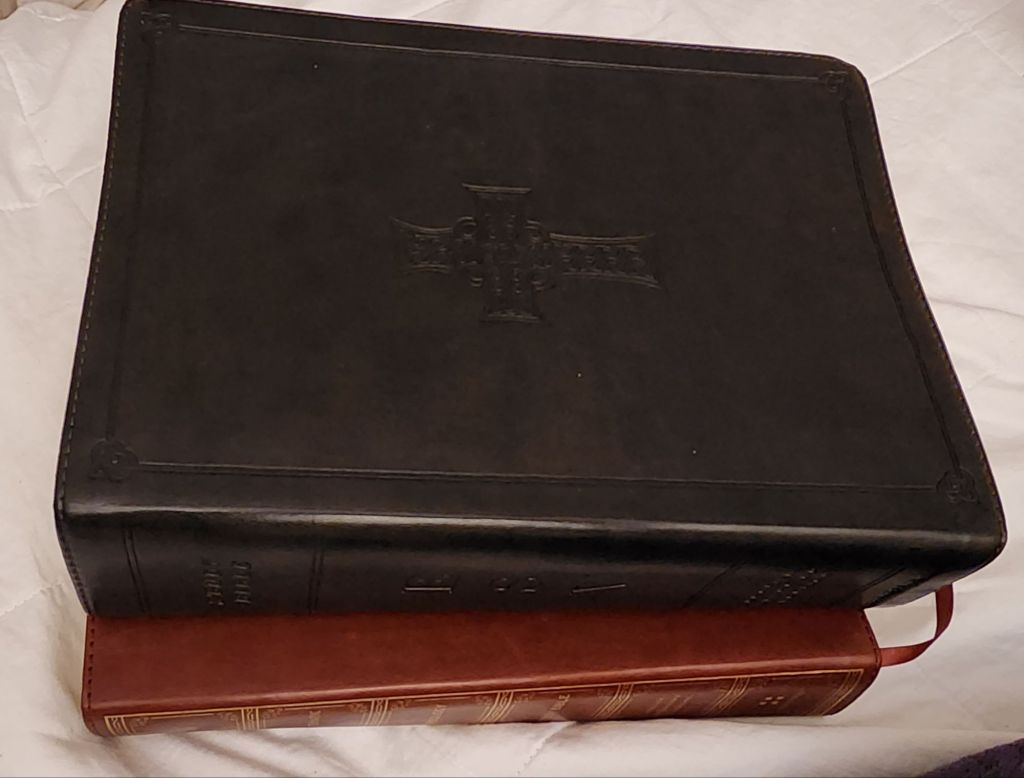
In literature, students will always hear the teacher say, “ Dig deep!” “Look for the symbolism!” “Scratch past the surface level!” “Look for the meaning! “There is a bigger picture here!” If someone does not care for literature then they are not too concerned about searching for the deeper meaning. Some students think that they may have the right answer or idea, but hesitation and fear of embarrassment make them not answer. It is a matter of being out of their comfort zone. Why would reading the Bible be any different?
What is the connection between reading literature and reading scripture? Generally, people read within a restricted view. For instance, if a person likes mysteries, they may read the novel for clues and overlook literary devices. In reading scripture, a person may read verses that pertain to the matter at hand, and they don’t read the reference that takes them to other scriptures or books of the Bible. Robert Vaughan’s God’s Big Picture encourages readers to not streamline and read only a particular text but to see the Bible as a whole.
Many people read the New Testament with no regard for the Old Testament because they do not understand the Old Testament or see its relevance in the New Testament or the current world. Many will say that they prefer the New Testament because the Old Testament is boring. It is important to see the Old Testament and New Testament as a complete work. Without both, we have an incomplete story.
Many people read the Bible as if it were like…a collection of independent books that can each be read without reference to the others. The Bible is not written that way, and if someone reads it like this, the reader is missing the meaning of it all. The Old Testament on its own is an unfinished story, a promise without fulfillment. [One] must read on to the New Testament if [a person] wants to know what it means. And the New Testament constantly looks back to the promise it fulfills. It is important to understand the plan and the fall of man in Genesis to capture fulfillment through the crucifixion and resurrection in the New Testament.
In Genesis, God created the heavens and the earth, separated light from darkness, separated waters from waters, dry land, and vegetation (Genesis 1:1-14). Then there was the creation of man in the image of God and female from man’s rib (Genesis 1:26-27). These verses acknowledge that people are God’s creation alone. In the perfect world, man failed due to sin, and he was no longer in a perfect world to fulfill God’s goal for him.
The goal was fulfilled through the scriptures of the Old Testament about one who would come and fulfill the promises of God. Ever since, God has been at work to re-establish his kingdom and to call a people back into fellowship with himself. This is why it is important to read the Old and New Testaments. Reading only the New Testament does not give the backstory of why the world needed a Savior. Being open to reading both expands our knowledge and recognition of how verses refer to the two testaments. Paul says, “All scripture is God-breathed…. All Scripture is breathed out by God and profitable for teaching, for reproof, for correction, and for training in righteousness, the man of God may be complete, equipped for every good work (2 Timothy 3:16-17). When Paul talks about “all scripture,” he is not limiting scripture to the New Testament. He is speaking of scripture from the Old Testament also.
Our takeaway is that one testament can not stand alone. Perhaps more conversations between leaders, clergy, and parishioners about bridging the Old and New Testaments would rejuevenate a desire in people to read and understand how God manifests his unwavering sovereignty with the passage of time.
CrayDawg, Inc. (C) 2024
 Coffee Reflections
Glad to see these posts. You have such deep insight. Keep writing, my friend. You need a publisher.
LikeLike
Awww, Susan Dobbins, thank you. Do you have a publisher in mind?
LikeLike
I wish I knew someone.
LikeLike