
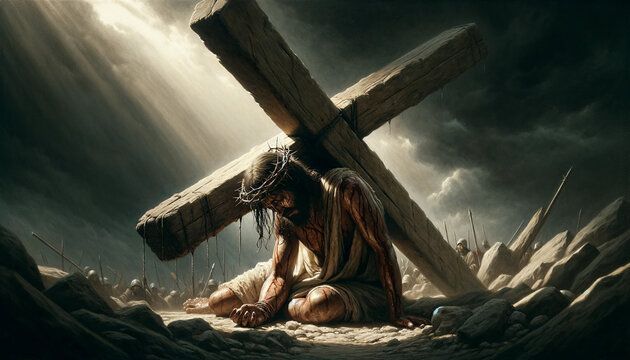
The celebration of Maundy Thursday: O Sacred Head Now Wounded.
The lyrics of this song will lead up to the Triduum (the three days that trace the final days of Jesus’ life, death, and resurrection).
When evening came, Jesus was reclining at the table with the Twelve. And while they were eating, he said, “Truly I tell you, one of you will betray me.” They were very sad and began to say to him one after the other, “Surely you don’t mean me, Lord?” Jesus replied, “The one who has dipped his hand into the bowl with me will betray me.
The Son of Man will go just as it is written about him. But woe to that man who betrays the Son of Man! It would be better for him if he had not been born.” Then Judas, the one who would betray him, said, “Surely you don’t mean me, Rabbi? Jesus answered, “You have said so.”
While they were eating, Jesus took bread, and when he had given thanks, he broke it and gave it to his disciples, saying, “Take and eat; this is my body.” Then he took a cup, and when he had given thanks, he gave it to them, saying, “Drink from it, all of you. This is my blood of the covenant, which is poured out for many for the forgiveness of sins.
I tell you, I will not drink from this fruit of the vine from now on until that day when I drink it new with you in my Father’s kingdom.” John 26: 20-29.
Knowing what was to come, Jesus prepared himself and the disciples for the final day. Once He was betrayed and sentenced for crucifixion, Those who scorned him “…stripped him and put a scarlet robe on him, and then twisted together a crown of thorns and set it on his head. They put a staff in his right hand. Then they knelt in front of him and mocked him. “Hail, king of the Jews!” they said. They spit on him, and took the staff and struck him on the head again and again. After they had mocked him, they took off the robe and put his own clothes on him. Then they led him away to crucify him. Matthew 27:28-31
O sacred head now wounded
With grief and shame weighed down
Now scornfully surrounded
With thorns thine only crown
How pale Thou art with anguish
With sore abuse and scorn
How does that visage languish
Which once was bright as morn
This stanza reminds us of Jesus’s pain as he was taken to the cross. We are reminded that faith and teaching have been a bright light to some and a misused vessel in incorporating a wrong agenda for others. Here was a man who had done nothing wrong. He was perfect in every way (a lamb without blemish). But what do we do when we don’t understand something or someone or feel our power and authority are being usurped? What happens when the increased popularity of a person punctures our pride and brings insecurity? Why do we feel the need to prove our position? Why must we flaunt our authority? We retaliate. Why? What was so important that a blameless man had to die?
What thou, my Lord, hast suffered
Was all for sinners’ gain
Oh mine was the transgression
But thine the deadly pain
Lo, here I fall, my Savior
‘Tis I deserve thy place
Look on me with thy favor
Vouchsafe to me thy grace
Stanza two reveals the need for the crucifixion. Jesus suffered for us! What did He gain by going to the cross? We reaped the rewards of His suffering! He died because He bore the weight of ALL of our sins. Can we even imagine the pain? No. In our hearts, we realize that no one deserves the grace extended to us in this action. We realize that we all belonged on that cross. On our knees, we pray and ask that favor be shown to us. We ask that the Lord remembers us. At this point, what else can we possibly say?
What language shall I borrow
To thank thee, dearest Friend
For this, thy dying sorrow
Thy pity without end?
Oh, make me thine forever
And should I fainting be
Lord, let me never, never
Outlive my love to thee
Stanza three brings reflection, fear, and remorse. What could we possibly say to a perfect, innocent man who was willing to die for us? What words in any language could make up for the pain, suffering, and death? What do we have to offer? What we recognize in this stanza is that we are loved. There is an understanding that we desire to never be separated from God again. However, the somber tone of O Sacred Head Now Wounded reminds us that the God we serve loves us, sacrifices for us, endured suffering for us, and willingly dies for us.
May we never forget.
CrayDawg, Inc. (C) 2024
 Coffee Reflections