
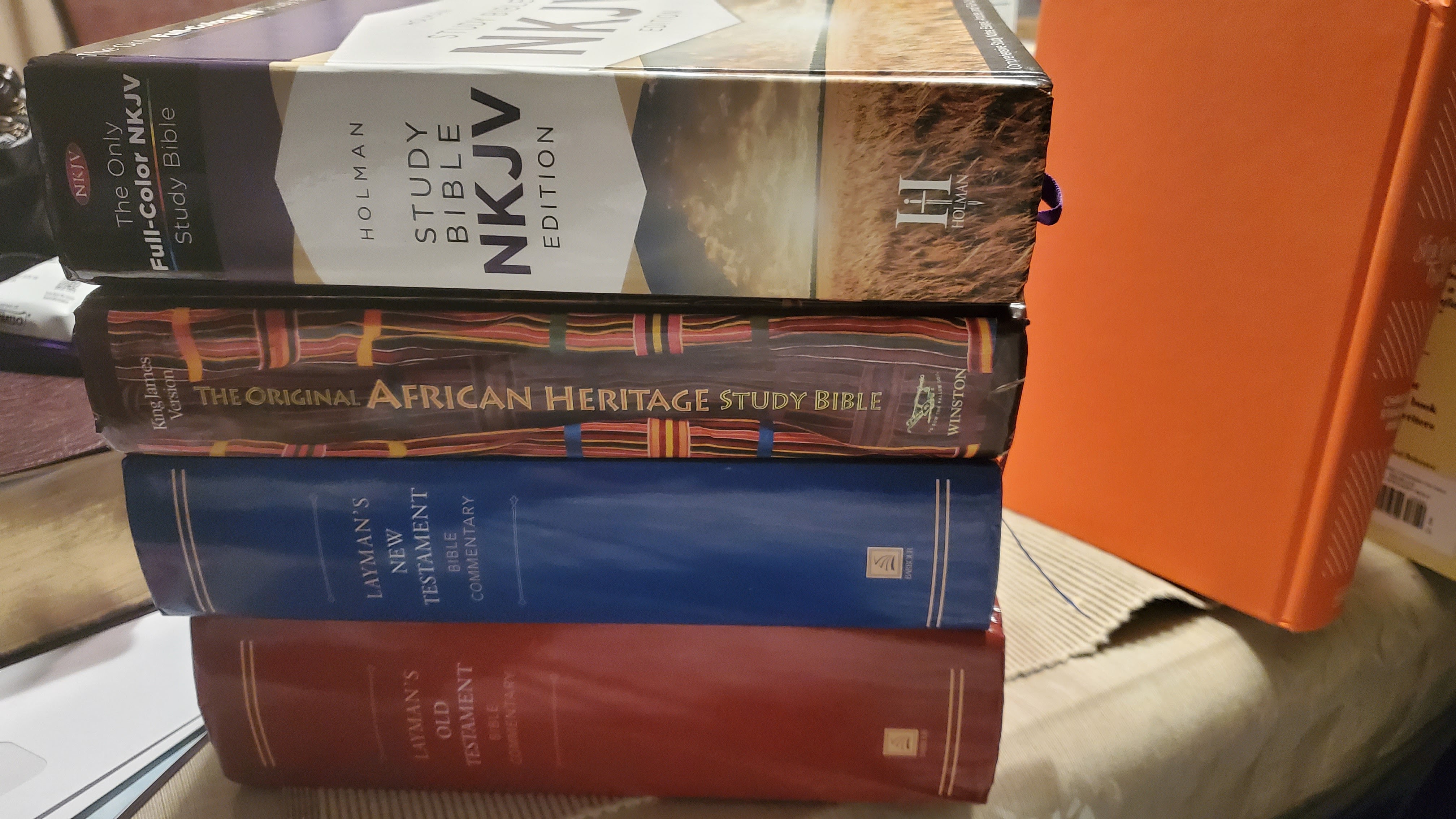
(2 Timothy 4:2)
If you work in any sector of education, you know that there are stories that can not be made up! I know this! I also know the purpose of a story. Stories are a part of the fabric of this country. We have stories that have been passed on throughout generations as a part of cultural heritage and as a part of history. Other stories are meant to entertain, persuade, or inform. As young children, we read fables and fairytales, and our imaginations run wild. Our taste changes as we grow older and develop an interest in different genres. Some books have a prequel or a sequel that keeps us engaged. Characters may change over the course of the book. We may even find ourselves biased toward a particular author. However, the one book that never changes in truth, in the plot, in characters, and in the setting is the Bible.
Recently, I had a student announce in the middle of class that she knew her bible, that she went to church, and that she was a Christian. While there is humor in her stories, there is also an underlying sadness also. “I go to church Teacher. I know my bible.” exclaimed the student. Well, she certainly got the attention of some of her classmates because she seemed anxious to tell her story. So I said, “Really? What do you know?” One would think that I should have known better, but I walked right into it. The student proceeded to tell me what she knew.
Story One: The Fall of Man: “I know that Adam and Eva lived in the garden, and Eva was tempted by the devil-serpent and ate a poisonous apple. That’s when they were told to get out of the garden!” After a great deal of laughter, she was told that Eve did not eat an apple, but she ate the forbidden fruit and that the fruit was not specified. By the way, her name was Eve. Her story had the makings of Snow White and the Seven Dwarfs. Pay attention to literature because the apple is used constantly as the poisonous catalyst for evil in stories. By now, the class was fully listening to this conversation. The student had an audience and would not be dissuaded from continuing.
Story Two: The Flood: “Noah knew that the flood was coming so he built a big ship and tried to warn all of the people to get on the ship, but they would listen. He took two of every animal on the ship with him. He must have stayed on the ship for 3-5 days, and then the Lord told him to get off the ship!” After much laughter, a student in the back of the room said, “You may want to times the 5 by 8. Forty days!” Another student told her that her story resembled a 2007 movie entitled Evan Almighty which was a humorous spin on the Noah and the ark storyline. In the movie, Evan (Noah) is portrayed by Steve Carell, a businessman, who tries to warn the town that the dam will break and the town will be flooded. He heard from God that he needed to build an ark. Of course, the people in his town thought that he was crazy and chose to ignore his warnings. When the dam burst, the entire town was running to get onto the ark.
Unlike the character of Evan, Noah’s story was a little different. He didn’t rally the people and warn them about the flood and the ending of the earth. “Now the earth was corrupt in God’s sight and was full of violence. God saw how corrupt the earth had become, for all the people on earth had corrupted their ways. So God said to Noah, “I am going to put an end to all people, for the earth is filled with violence because of them. I am surely going to destroy both them and the earth. So make yourself an ark of cypress wood… But I will establish my covenant with you, and you will enter the ark—you and your sons and your wife and your sons’ wives with you. You are to bring into the ark two of all living creatures, male and female, to keep them alive with you. Two of every kind of bird, of every kind of animal, and of every kind of creature that moves along the ground will come to you to be kept alive. You are to take every kind of food that is to be eaten and store it away as food for you and for them” (Genesis 6:11-21).
Story Three: Parting of the Red Sea: “I know that there was a sea that was parted, and the people walked across it. But when the other people tried to come across, they drowned.! The question was asked, “Who were these people?” and the storyteller’s response was, “I don’t know, but I know that they crossed that sea, and the rest of the people drowned.” At this point, the entire class was listening, shaking their heads, and laughing uncontrollably. My student in the back once again explained the story of the parting of the Red Sea. Then Moses stretched out his hand over the sea, and all that night the Lord drove the sea back with a strong east wind and turned it into dry land. The waters were divided, and the Israelites went through the sea on dry ground, with a wall of water on their right and on their left... Moses stretched out his hand over the sea, and at daybreak, the sea went back to its place. The Egyptians were fleeing toward it, and the Lord swept them into the sea” (Exodus 14:21-22, 27).
Story Four: David and Goliath: “Yes, I know about David and Goliath. David was thrown into the den with the lion.” Again, the student in the back said, “I think that you have your names mixed up. David and Daniel.” Another student leaned over and told the storyteller that Goliath was the giant in the story. She said, “Oh yeah, I know about the giant. David went out to fight him. That was when he said, “Fe, Fi, Fo, Fum, I can feel you under my thumb!” Any self-control or class control was officially over. The classroom roared with laughter. Students were bent over the desks! Many were in tears! Once again my student in the back said through tears, “I think you are talking about Jack and the Beanstalk!” By this time, there was nothing left of this class. Her story was based on 1 Samuel 17: 48-50: As the Philistine moved closer to attack him, David ran quickly toward the battle line to meet him. Reaching into his bag and taking out a stone, he slung it and struck the Philistine on the forehead. The stone sank into his forehead, and he fell facedown on the ground. So David triumphed over the Philistine with a sling and a stone; without a sword in his handy he struck down the Philistine and killed him.
Before this class was over, my student, the storyteller, engaged us with more stories about the guy who was swallowed and thrown up by a whale. There was the story of the man who got out of a boat and walked on water, but he immediately drowned. There was a man named Judah that people hated for betraying Christ. For bible readers, we knew that she was talking about Jonah, Peter, and Judas. At the end of class, I asked the student about the source for her stories, and her response hit me like bricks. She said, “You know Teacher, Medea tells bible stories in all of her movies!” Wow! As this student left the room, the parting piece of advice was “Read your bible!”
This class session will be one that I will remember for years to come. However, once I had a chance later in the day to reflect on the events of that class, I looked past the humor and saw the sadness of the situation. Here was a student who really thought that she knew some bible stories, but what she had was a conglomeration of bible stories, children’s books, and misinformation from the entertainment industry. Do we have a responsibility to teach young people the art of discernment? How do we teach them the fine line between truth and fiction? With the many bible translations, how do we help young people find the truth? Perhaps, we have the ongoing assignment to discover and impart what is in our translation.
 Coffee Reflections